
When Should Your Child Move to a Booster Seat?
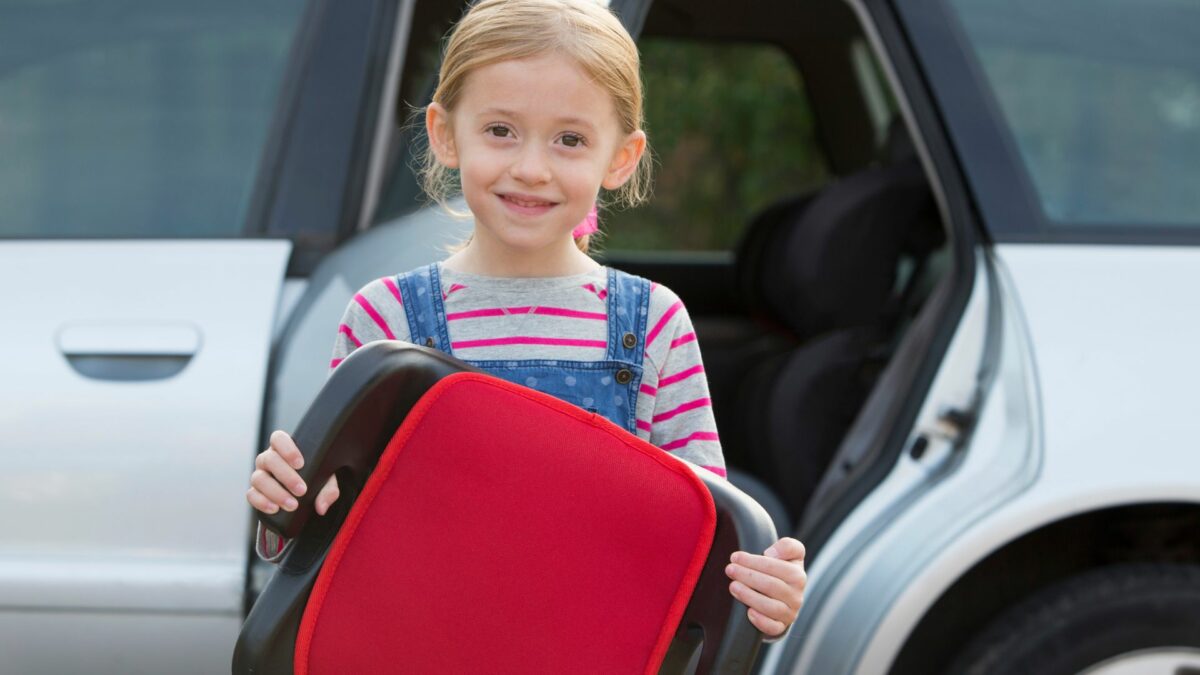
If you are wondering whether your child is ready for a booster seat, you are already doing the thing that matters most, which is checking rather than guessing. The answer comes down to a handful of things you can see with your own eyes in about two minutes.
This week is Child Passenger Safety Week, September 20 through 26, 2026, so it is a natural moment to look at where your child is right now. Below are the signs that say yes, the signs that say give it a little longer, and how to get a free second opinion from a certified technician right here in Onslow County.
A quick tip from One Place: Your child’s current car seat is the answer key. Find the height and weight limits printed on the label, then compare them to your child today. If they are still inside those limits, the harness is still the right seat.
The short answer
A child is ready for a booster when they have outgrown their forward-facing harnessed seat by the height or weight limit printed on that seat, and they are mature enough to sit properly for an entire ride.
Birthdays, how tall their friends are, and whether they have started asking for a big kid seat all sit outside that answer. Many children stay comfortably in a harness until 60 or 65 pounds, and some are closer to age six or seven before a booster makes sense.
What a booster seat actually does
A harnessed car seat holds your child in place with its own five-point harness. A booster works differently. It lifts your child so your vehicle’s own lap and shoulder belt lands where it was designed to land on a grown body: low across the hip bones and flat across the middle of the chest and shoulder.
That is the entire job, and it is a real one. Adult seat belts are built for adult proportions. Without a boost, the lap belt tends to ride up onto the soft middle and the shoulder belt tends to cut across the neck, which is why children pull it behind their back or under their arm.
Good to know: A booster works only with a lap and shoulder belt together. It always needs both.
High-back or backless
Both are safe when used correctly, and the right pick depends on your vehicle and your child.
High-back boosters provide head and neck support and belt guides that help position the shoulder belt. They suit younger booster riders and anyone who falls asleep in the car.
Backless boosters are light, inexpensive, and easy to move between vehicles or hand to a carpool driver. They work when your vehicle seat provides head support, meaning your child’s ears sit below the top of the vehicle head restraint.
Worth knowing: Some combination seats convert from a harnessed seat to a high-back booster, then to a backless booster. If you own one, the manual will tell you the limits for each mode, and they are different numbers.
Five signs your child is ready
One. They have reached the top height or weight limit for the harness on their current seat. Check the label, not your memory.
Two. They meet the minimum height, weight, and age requirements printed on the booster you plan to use. Boosters vary, and some start at 40 pounds while others start higher.
Three. With the booster in place, the lap belt crosses the bones of the upper thighs and hips.
Four. With the booster in place, the shoulder belt crosses the middle of the shoulder and chest.
Five. They can sit correctly for the whole ride. No slouching, no leaning across to a sibling, no sliding the belt out of position when the movie gets boring on the way to Wilmington.
Five signs to give it a little longer
One. They still fit within the harness limits on their current seat. If the seat still fits, the seat still works.
Two. The lap belt sits on the belly rather than the hips, even with the booster.
Three. The shoulder belt lands on the neck, or slides off the shoulder entirely.
Four. They unbuckle, wriggle out, or reposition the belt during rides.
Five. They fall asleep and slump sideways out of position, and you do not have a high-back booster to support them.
Each of these is useful information, and staying in the harness a few more months is a perfectly good outcome.
How to use a booster correctly, every ride
Back seat, always. Children under age 13 belong in the back seat, in every vehicle.
Test it in every car. A booster that fits beautifully in your sedan may sit at an odd angle in your partner’s truck or in Grandma’s SUV. Check the belt fit in each vehicle your child rides in, and adjust or swap the booster as needed.
Route the belt through the guides. High-back boosters have a shoulder belt guide near the head. Use it. Backless boosters usually have lap belt guides or armrests that hold the lap belt low.
Buckle the booster when it is empty. An unbuckled booster becomes a loose object in a sudden stop. Either belt it in or bring it inside.
Model it. Everyone in the car buckles, every time. Booster-age children are watching closely and copying more than you think.
What North Carolina law says
North Carolina General Statute 20-137.1 sets the requirement plainly. A child who is both under age eight and under 80 pounds must ride in a weight-appropriate child restraint, which can be a harnessed car seat or a booster. Once a child reaches age eight, regardless of weight, or reaches 80 pounds, regardless of age, a properly fitted seat belt may be used instead.
The law also requires that children under age five and under 40 pounds ride in the back seat whenever the vehicle has an active passenger-side front airbag and a rear seat is available. And boosters are always used with a lap and shoulder belt.
Good to know: The statute sets a minimum. Many children reach their eighth birthday well before the seat belt actually fits their frame, and keeping a booster longer is entirely allowed. Fit is the standard worth aiming for.
When your child is ready for the seat belt alone
Once your child is booster-age, the next question arrives. There is a simple five-step check, and it needs five yeses in the specific vehicle they are riding in.
- Does your child sit all the way back against the vehicle seat?
- Do their knees bend comfortably at the edge of the seat cushion?
- Does the lap belt lie low across the upper thighs, touching the hip bones?
- Does the shoulder belt cross the middle of the shoulder and chest?
- Can they stay that way for the entire ride?
Most children pass all five somewhere between ages eight and 12, often closer to four feet, nine inches tall. And because vehicles differ, a child can pass in one car and still need the booster in another. That is normal, and it is worth rechecking whenever you change vehicles.
Carpools, PCS moves, and booster logistics
Booster years tend to collide with carpools, school pickup, and moving season, so a few things help.
Keep a spare backless booster. They are inexpensive, they fit in a backpack, and they solve the friend’s-car problem before it comes up.
Recheck after a PCS. New duty station, new vehicle, sometimes a new school bus route. Rerun the five-step check in whatever your child is riding in now.
Talk to the carpool driver. A quick word about the booster and the belt routing is a normal, easy conversation, and other parents are usually glad you brought it up.
Free booster fit checks in Onslow County
You do not have to make this call alone. Certified child passenger safety technicians will look at your child in the seat and tell you what they see, and it costs nothing.
Where: One Place, 1200 Commons Drive North, Jacksonville.
Cost: Free, for any Onslow County family.
How to schedule: Text “Safe Kids” to 910-333-0608 for an appointment.
Also available: Jacksonville Fire and Emergency Services runs a Child Passenger Seat Program by appointment. Call 910-455-8080.
Learn more: Our roundup of car seat check options across Onslow County covers every local option, and our full car seat safety guide walks through installation and harness fit.
Frequently asked questions
At what age can my child use a booster seat?
Readiness is about outgrowing the harness limits on the current seat and being able to sit properly for the whole ride, so age is the least useful signal. Many children are six or older before a booster is the right fit.
Is a booster seat as safe as a five-point harness?
Once a child has genuinely outgrown their harnessed seat, a correctly used booster does its job well. Before that point, the harness offers better protection, so there is no reason to switch early.
Can my child use a backless booster?
Yes, when the vehicle seat supports their head, meaning their ears sit below the top of the head restraint. Otherwise choose a high-back booster.
Does North Carolina require a booster seat specifically?
The law requires a weight-appropriate restraint for children under age eight and under 80 pounds. It does not name a seat type, so the manufacturer’s instructions and the belt fit are your guide.
Can my child ride in the front seat once they are in a booster?
The back seat is the right place for every child under age 13, booster or not.
Where can I get a booster fit checked in Onslow County?
Text “Safe Kids” to 910-333-0608 for a free appointment with a certified technician at One Place.
Why this matters
The booster years land right where children start doing things on their own. They buckle their own belt, they climb in without help, they notice whether the adults in the front seat are buckled too. That makes it a great stretch for handing over a little responsibility on purpose, showing them what a correct belt looks like on their body, and letting them check it themselves. A child who knows what right feels like carries that with them into every car they ever ride in, long after the booster is gone.
We’re Here to Help
One Place is here for Onslow County families with car seat checks, early learning, child care referrals, and family support, all in one place. Call us at 910-938-0336, or browse our family resources page.
Follow along on Facebook and Instagram, and tag us when your child graduates to the next seat. We love those milestones.
Ready to take the next step? Text “Safe Kids” to 910-333-0608 and have a certified technician confirm the fit.
Want to help every child in Onslow County thrive? Your gift supports safe care, early learning, and hope for local families. Donate today.